

The UAE is consistently developing eco-tourism and creating new natural spaces. Alongside large-scale residential and infrastructure projects, the country is establishing nature reserves, oases, green clusters, and recreational areas designed for both tourists and UAE residents.
Today, the UAE is home to about 60 protected natural areas: 38 terrestrial, 21 marine, and one coastal zone. Together, they cover about 6% of the country's territory.
Among the most well-known natural locations are the Dubai Desert Conservation Reserve, Ras Al Khor Wildlife Sanctuary, Al Marmoom, the Wadi Wurayah mountain reserve, and the Marawah Marine Biosphere Reserve in Abu Dhabi.
The development of such areas is becoming important not only for the tourism industry. Nature, landscaping, and outdoor infrastructure are gradually becoming key factors in the development of residential areas and the UAE real estate market.
Why eco-tourism in the UAE is gaining popularity
Interest in nature destinations is highest during the winter and spring, when the climate allows for more time to be spent outdoors.
One of the unique features of the UAE is the combination of vastly different landscapes within a single country: deserts and mountains, coastlines and mangrove forests, lakes and modern green spaces.
Most natural parks and reserves remain accessible to the general public. Entry to some areas is free, while others cost around 10–50 AED, and additional activities—such as safaris, camping, glamping, or bike rentals—can cost approximately 150 to 1,000 AED depending on the format and level of service.
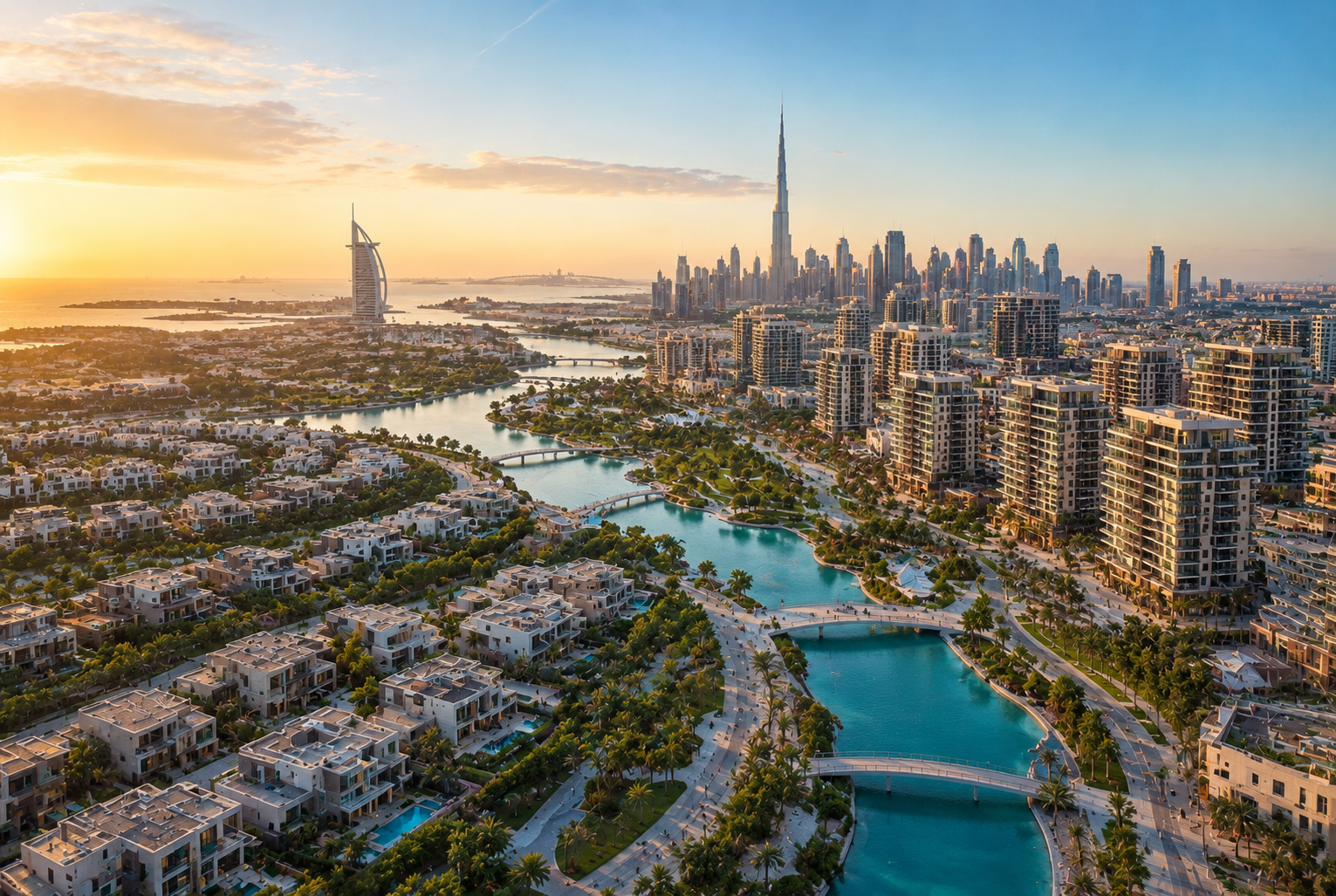
At the same time, the approach to residential development is changing. Developers are increasingly integrating lagoons, parks, walking trails, sports facilities, and other natural elements into their projects.
One example is The Oasis by Emaar, where villas and low-rise properties are being developed under a resort living concept featuring abundant water features and green spaces.
Al Layan Oasis: A large-scale nature-inspired project in Dubai
One of the most notable new projects is Al Layan Oasis in the Al Marmoom desert area, approximately a 45-minute drive from central Dubai.
The total area of the project covers about 1 million sq. m, and the artificial lake will span over 250,000 sq. m. Plans include the creation of green spaces, cycling and walking trails, camping sites, and various recreational areas.
Its location near Al Marmoom and the Al Qudra lakes will integrate Al Layan Oasis into one of Dubai's major natural clusters.
The project concept is based on the principles of slow living — a relaxed lifestyle with plenty of time spent in nature and the outdoors.
The site will feature about 14 km of walking and cycling trails, as well as picnic areas, camping zones, an amphitheater, an outdoor cinema, food courts, and spaces for yoga, sports, and family recreation.
Special attention is being paid to preserving the existing desert landscape and the local ecosystem.
Al Layan Oasis is part of the Blue and Green Roadmap 2030 program, which has a budget of approximately 4 billion AED.
The project is currently in the engineering and infrastructure preparation phase. Following the approval of the master plan in 2026, work began on the future lake's water system, trails, and areas designated for landscaping.
The first zones of Al Layan Oasis are expected to open between 2027 and 2028. Once completed, the project is set to become a new natural landmark for residents and tourists alike.
Kalba: Ecotourism on the East Coast of Sharjah
Another direction for ecotourism development is Kalba in the Emirate of Sharjah.
The natural environment here is distinctly different from Dubai's urban landscape, with the Hajar Mountains meeting mangrove forests and the coastline of the Gulf of Oman.
One of the key projects is the Nomad eco-resort, which opened at the end of 2025. The complex features just 20 eco-luxury trailers, seamlessly integrated into the natural landscape.
The resort runs on solar energy and focuses on a digital detox experience, offering guests hiking, outdoor yoga, stargazing, and a peaceful retreat away from the dense urban environment.
Running in parallel is the development of Kalba Beach, an eco-friendly beach cluster stretching approximately 700 meters. Construction is scheduled for completion by the end of 2026. The project includes walking paths, cafes, family-friendly facilities, and spaces for local businesses.
Another upcoming site is the Kalba Rock Art Centre near Al Hefaiyah Park. The center is being built next to ancient rock carvings and archaeological sites dating back thousands of years, with an opening planned for the third quarter of 2026.
Expo Valley Nature Reserve: Nature within modern Dubai
A different approach is implemented at Expo Valley Nature Reserve in Expo City Dubai, where natural space becomes an integral part of the modern urban environment.
The reserve covers an area of about 10 hectares. The site features a lake, green valleys, and over 1,200 trees, including native acacia and ghaf species.
The core concept of Expo Valley is to demonstrate how a residential community in a desert climate can coexist with abundant natural spaces.
The project aims to minimize vehicular traffic and integrate residential blocks into the surrounding landscape. It includes wellness areas, cycling paths, hiking trails, and natural playgrounds for children.
For the real estate market, the combination of low-rise development, green surroundings, and proximity to Expo City Dubai is particularly significant.
This format may appeal to families and individuals who want to live in Dubai but are looking for an alternative to high-density, high-rise neighborhoods.
Hudayriyat Island: a new lifestyle format in Abu Dhabi
Hudayriyat Island is one of Abu Dhabi's major lifestyle projects, with development centered around nature, sports, and outdoor recreation.
The island spans about 3,000 hectares and is gradually evolving into a major outdoor hub.
It is already home to Marsana East Beach, the 321 Sports complex, cycling tracks, BMX parks, camping areas, and the Circuit X adventure park.
One of the most notable features is Surf Abu Dhabi — a large-scale artificial surf park.
The development of Hudayriyat Island is ongoing. Future plans include new residential communities, wellness spaces, golf resorts, and low-rise villas nestled among parks and lagoons.
The project reflects a shift in the very concept of premium living in the UAE. The value of real estate is increasingly linked not only to location, architecture, or private beach access, but also to the quality of the environment, sports facilities, and the abundance of open spaces.
How the growth of ecotourism is impacting UAE real estate
The development of nature-focused clusters is a notable trend in the UAE real estate market. When choosing a home, buyers are increasingly looking beyond the features of the apartment or villa and focusing on the infrastructure of the entire neighborhood.
Taking center stage are parks, lakes and lagoons, pedestrian areas, cycling paths, sports facilities, and access to natural landscapes.
Several key trends can be identified in the market:
- growing interest in low-rise residential communities and villas;
- an increase in projects featuring parks, lagoons, and artificial lakes;
- the development of wellness and outdoor infrastructure within residential areas;
- the emergence of properties located near natural and recreational clusters;
- the spread of concepts Resort living and slow living.
For developers, the natural environment is gradually becoming a core part of the product rather than just an add-on.
What this means for investors
For an investor, the emergence of a major natural or tourism project near a residential area can be a key driver of its future development.
New infrastructure can increase a location's appeal to residents, tenants, and buyers. This is especially relevant for areas in the early stages of development that are gradually gaining new roads, public spaces, tourist attractions, and social infrastructure.
However, the mere fact that a park, oasis, or nature reserve is being built does not guarantee an increase in property value or high returns.
When evaluating a property, it is necessary to consider a combination of factors: entry price, future supply volume, transport accessibility, the pace of district development, rental demand, the developer's reputation, the payment plan, and the characteristics of the property itself.
This is precisely why a district's ecological concept should be viewed as one of many factors of investment attractiveness, rather than the sole basis for a purchase.
The green transformation is becoming part of the UAE's development
Al Layan Oasis, Kalba, Expo Valley Nature Reserve, and Hudayriyat Island show that natural spaces are becoming part of the long-term development of various emirates.
For the UAE, this simultaneously drives the tourism industry, improves the quality of the urban environment, and creates new formats for residential areas.
For the real estate market, something else is particularly important: green infrastructure is gradually becoming a criterion for location quality alongside transport accessibility, social infrastructure, and proximity to business hubs.
For buyers, this offers more lifestyle options, and for investors, it provides new districts and projects to analyze.

.png)
.avif)