
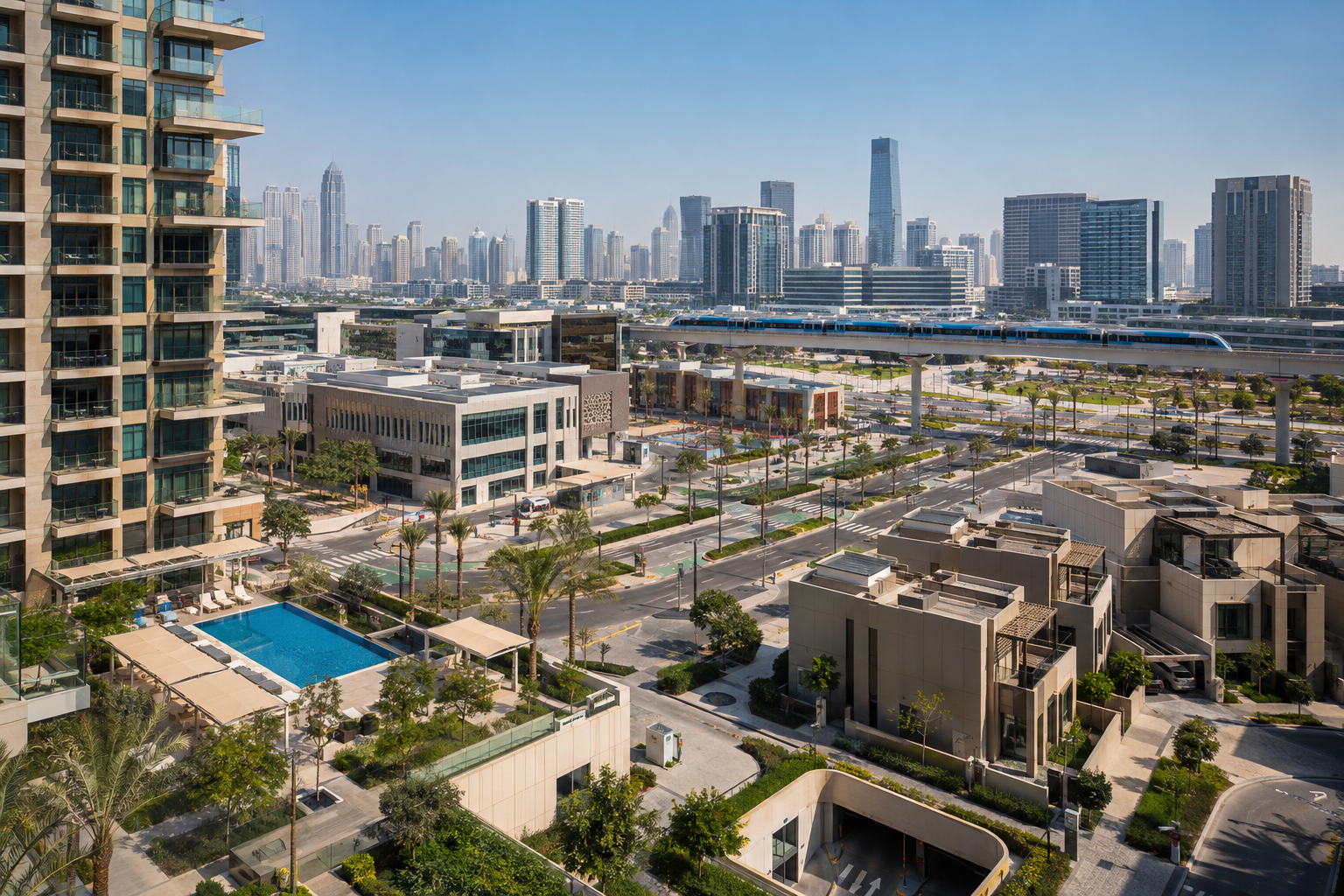
The Emirates lead in relocation convenience, safety, and career opportunities
The United Arab Emirates ranked fourth globally among the best countries for expats to live in, according to the Expat Insider 2026 survey conducted by the international network InterNations.
Only Panama, Mexico, and Thailand ranked higher than the UAE. At the same time, the Emirates became the top-ranked country in the Middle East, outperforming popular destinations for foreign professionals such as Spain, Singapore, and Portugal.
The UAE's high ranking is attributed to a combination of developed infrastructure, career opportunities, safety, digital government services, and a relatively straightforward settling-in process.
These indicators are particularly important for the real estate market, as the country's appeal for long-term residency among foreign professionals directly impacts demand for home purchases and rentals.
The UAE has become a leader in quality of life for foreign residents
The country performed particularly well in the Expat Essentials Index, which evaluates the practical aspects of relocating and daily life abroad.
The UAE ranked first out of 31 countries.
The study took into account factors such as:
- visa processing;
- digital government services;
- banking infrastructure;
- availability of cashless payments;
- internet quality;
- the ability to live without knowing the local language;
- ease of finding housing.
According to the study, 80% of respondents described the visa process in the UAE as easy, compared to the global average of 55%.
A developed digital infrastructure also allows for most government and financial matters to be handled online, which simplifies the adaptation process for new residents.
64% of expats find it easy to find housing in the UAE
The assessment of housing accessibility deserves special attention.
According to the Expat Insider 2026 survey, 64% of participants stated that finding housing in the UAE is relatively easy, compared to a global average of 44%.
This high figure reflects the scale and diversity of the country's real estate market. Dubai, Abu Dhabi, and other emirates offer a wide selection of apartments, townhouses, and villas for both rent and purchase.
However, the cost of living remains a significant factor. Rising rental rates in major UAE cities can increase household expenses, particularly for families requiring spacious housing near schools and business districts.
This is precisely why many long-term residents eventually begin to consider purchasing their own property as an alternative to ongoing renting.
The UAE ranked third in the world for quality of life
The country also ranked among the global leaders in the Quality of Life index, securing the third position.
Safety and stability received particularly high marks.
94% of respondents rated personal safety in the UAE positively, and 89% expressed satisfaction with the country's political stability.
For expats, this is one of the key factors when choosing a country for long-term residence, especially when relocating with a family.
Other areas that received high ratings include:
- healthcare infrastructure;
- dining and leisure options;
- road networks;
- cultural attractions;
- recreational opportunities.
Together, these characteristics create an environment that is attractive not only for temporary work but also for long-term living.
Career prospects remain one of the primary advantages
The UAE ranked third in the Working Abroad Index and first specifically for career prospects.
More than half of those surveyed rated the country's job market positively.
Furthermore, 80% of expats reported that moving to the UAE improved their career opportunities, compared to a global average of 55%.
This is especially important for Dubai and Abu Dhabi, where the financial, technology, tourism, logistics, construction, and professional sectors continue to expand.
The growing number of skilled professionals supports not only the labor market but also the demand for real estate, as many foreign employees begin to view the country as a long-term base for their families and careers after living here for a few years.
Expats are increasingly staying in the UAE for the long term
High ratings for career opportunities, safety, and quality of life are contributing to a shift in the behavior of foreign residents.
For many professionals, the UAE is no longer just a temporary place to work for a few years.
The development of long-term residency programs, including the Golden Visa, allows entrepreneurs, investors, and highly skilled professionals to plan their lives in the country with greater confidence over the long term.
This is also changing attitudes toward real estate.
With a long-term horizon, residents are more likely to compare the cost of renting with buying their own home and evaluate neighborhoods from the perspective of permanent residency.
What expats value when choosing a home in the UAE
For long-term residents, the price of a property is just one of many criteria.
When choosing real estate, the following factors are becoming increasingly important:
- transport accessibility;
- proximity to the workplace;
- schools and kindergartens;
- medical facilities;
- shops and restaurants;
- parks and walking areas;
- neighborhood safety;
- quality of residential complex management.
Social infrastructure is particularly important for families, while entrepreneurs and professionals may pay more attention to proximity to business hubs and transport routes.
Therefore, neighborhoods with comprehensive infrastructure attract a broader audience of both buyers and long-term tenants.
High cost of living remains a factor for expats
Despite a strong overall ranking, the UAE received a more moderate score for personal finance, placing 18th in that category.
This shows that attractive salaries and the absence of personal income tax do not always fully offset the cost of living.
Resident budgets can be affected by:
- rental costs;
- children's education;
- medical expenses;
- transportation;
- everyday services.
Therefore, the financial model of moving to the UAE largely depends on income level, family size, and the chosen residential area.
For residents planning to stay in the country long-term, purchasing property can be considered a tool for long-term financial planning, though the decision must be made taking into account the property price, mortgage terms, and the opportunity cost of renting.
Work-life balance received a lower score
One of the country's relative weaknesses is the Work and Leisure index.
The UAE ranked 24th in this category.
The result shows that a strong job market and good career prospects can come with an intense work schedule.
For property buyers, this further increases the value of neighborhoods that reduce daily commute times and provide essential services close to home.
Proximity to the office, metro, schools, sports facilities, and leisure areas can significantly impact the quality of daily life.
69% of expats are satisfied with life in the UAE
Overall, 69% of survey participants stated that they are satisfied with their life in the country.
This figure is close to the global average of 70%.
At the same time, nearly a third of respondents described themselves as completely happy, compared to a global average of 24%.
The results show that the UAE's appeal is not based solely on income levels or tax policy.
Safety, infrastructure, career growth, and the ease of handling everyday tasks play a major role.
How the UAE's appeal to expats affects real estate
The country's high international ranking has practical implications for the housing market.
The constant influx of foreign professionals drives demand for:
- long-term rentals;
- apartments near business hubs;
- family townhouses and villas;
- ready-to-move-in properties;
- new residential communities;
- purchasing a first home.
The more expats view the UAE as a place for long-term living, the more the market relies on actual end-user demand rather than just investment deals.
This can increase the resilience of established neighborhoods with developed infrastructure and stable rental demand.
What this means for investors
For an investor, the country's international appeal is primarily important as a factor in shaping future demand.
If professionals, entrepreneurs, and families continue to move to the UAE, they will need housing—often starting with rentals, before some eventually transition to purchasing property.
When choosing an investment property, you should therefore evaluate not only potential price appreciation but also its appeal to the end user.
The most important factors are:
- location;
- transport;
- infrastructure;
- layout convenience;
- maintenance costs;
- building quality;
- rental demand;
- volume of competing supply.
Projects that meet the real needs of long-term residents can enjoy a more stable audience of tenants and secondary market buyers.
The UAE maintains its status as one of the leading destinations for international professionals
A fourth-place ranking in the Expat Insider 2026 and the top spot in the Expat Essentials Index confirm the UAE's competitiveness as a country for relocation and work.
The Emirates' key strengths include career opportunities, safety, digital infrastructure, and a relatively smooth adaptation process for new residents.
At the same time, the cost of living and work-life balance remain factors that must be considered when planning a move.
For the real estate market, the long-term trend is what matters most: the UAE continues to attract international professionals, entrepreneurs, and families, which means there is a fundamental, ongoing demand for high-quality housing for both rent and personal use.


.avif)