
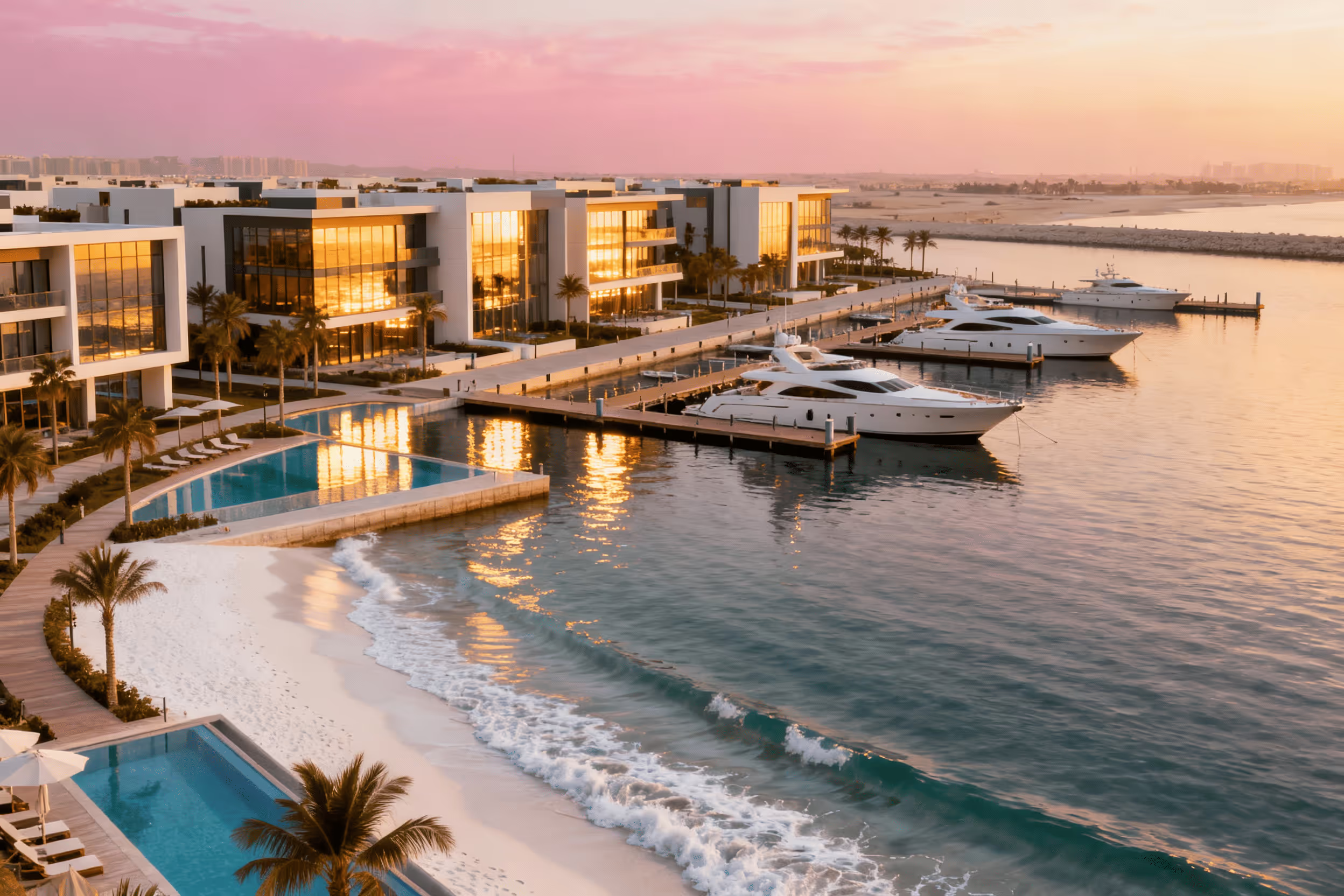
Interest in real estate in the UAE Emirates outside Dubai continues to grow. Investors are increasingly considering buying apartments or villas in Ras Al Khaimah, Abu Dhabi, Ajman, and Umm Al Quwain. Especially considering the active advertising campaigns carried out by many brokers. However, bright presentations and loud promises — price increases, guaranteed income, easy exit from investments — often hide legal and practical difficulties that are important to understand in advance.
Why deals outside Dubai require special care
- Different regulatory systems: not everything like Dubai
Only Dubai has a transparent digital transaction management system: all transactions go through the Dubai Land Department (DLD), are instantly registered in the system, and each investor can track the deal, check the project and the level of demand for the property online.
In other emirates:
• there is no full-fledged digital portal with online transactions;
• it is impossible to track sales statistics in real time;
• there is no independent database of transactions (there are no analogues to DXBInteract or DLD REST API).
This makes it more difficult both to assess the liquidity of the property and to verify the developer and its history.
- Broker licenses: not everyone has the right to sell
Many Dubai brokers and agencies are licensed only for the Emirate of Dubai. But by law:
• you cannot sell real estate in other Emirates without proper registration and a local brokerage license;
• a broker without a license in this emirate will not be able to place an ad on the secondary market (for example, in Abu Dhabi or Ras Al Khaimah);
• when trying to resell a property, an investor faces the problem of finding a new broker, which delays the deal.
Before concluding a contract, it is important to:
• check the agency's and broker's license (including the geography of operation);
• find out if they are eligible to work in the desired emirate;
• request full information about the activities approved in the license.
Why this is especially important for investors
Real estate in other emirates can be:
• less liquid;
• more difficult to manage;
• with less demand from tenants and buyers.
It is also worth considering:
• There are fewer management companies in these emirates, especially those with staff who speak Russian, German, French or Spanish;
• the volume of transactions on the secondary market is significantly lower, which affects the speed of exit from investments;
• There is no developed market for analytics and open sources that can be used to track who rents, how much rent, what is the occupancy rate, etc.
Investment or final residence?
The real estate market in the Emirates outside Dubai is primarily aimed at the end user or tourist, especially:
• for accommodation (including moving);
• for daily rent.
But at the same time:
• rental income may be unstable;
• the number of management companies is limited;
• achieving a payback requires an accurate calculation and strategy.
How to protect yourself
If you're still considering buying property in Ajman, Ras Al Khaimah, Umm Al Quwain, or Abu Dhabi, don't just rely on brokers' promises. Make sure of the following:
• The agent has a valid license for the territory of the desired emirate.
• The developer is accredited and his project has official permission.
• You have been provided with a legal opinion on the ownership scheme (Freehold/Leasehold/Investment zone).
• There is a realistic plan for managing and reselling, with a clear understanding of who will be doing this.
Conclusion: real estate in other emirates is not always bad, but it is always more difficult
Real estate in the UAE Emirates outside Dubai is not necessarily a bad investment. However:
• it is more difficult to work with her;
• There are fewer exit opportunities;
• There are more risks, especially without understanding the specifics of local regulation.
If you are still planning to buy a property in another emirate, contact licensed experts who work throughout the UAE. We will tell you how to properly build an investment strategy, where risks will be minimal and income will be real.


.avif)