
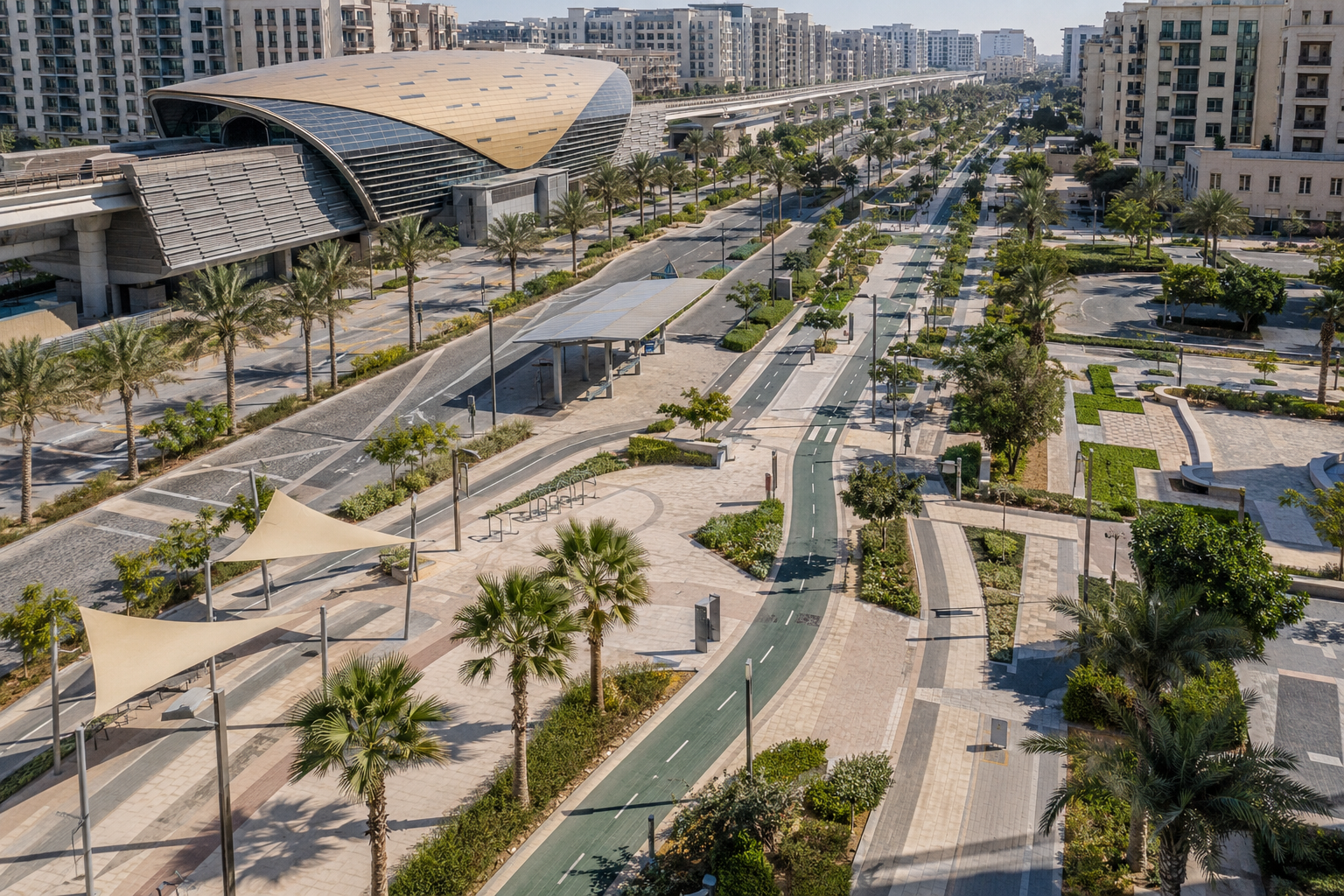
Dubai to expand infrastructure for pedestrians, cyclists, and e-scooter users
The Dubai Roads and Transport Authority (RTA) has approved a five-year plan to develop soft mobility infrastructure across the emirate. By 2030, new pedestrian routes, cycling tracks, and e-scooter zones will be added to 25 more residential districts.
At the same time, authorities are upgrading areas surrounding 63 metro and bus stations. The project's primary goal is to make travel between residential neighborhoods and transport hubs safer, more comfortable, and more accessible, reducing the reliance on private vehicles.
Work is already underway in several Dubai districts
The new program will build upon projects currently being implemented in the following locations:
- Dubai Marina;
- Naif;
- Al Rigga;
- Al Murar;
- Al Muraqqabat.
In these areas, the RTA is developing infrastructure for walking and cycling.
Plans for areas around metro and bus stations include wide sidewalks, dedicated bike lanes, covered pedestrian walkways, safe crossings, bicycle parking, and designated passenger drop-off and pick-up zones.
These solutions are designed to simplify the "first and last mile" of a journey—the trip from home or work to public transport and back.
Interest in alternative modes of transport continues to grow
According to RTA data, in 2025, residents and visitors in Dubai made:
- 342 million pedestrian trips;
- 57.3 million bicycle trips;
- 39.6 million e-scooter trips.
These figures demonstrate a high demand for modes of transport that complement the metro, buses, taxis, and private cars.
Developing the appropriate infrastructure should make such trips safer and more convenient, while also increasing the appeal of public transport.
By 2030, the program will cover 34 districts
As a result of the new plan, the total number of Dubai districts with developed soft mobility infrastructure will reach 34.
The project includes the creation of:
- dedicated cycling routes;
- safe pedestrian crossings;
- shaded walkways;
- rest areas;
- landscaped public spaces;
- bicycle parking;
- car parking;
- drop-off and pick-up zones;
- stations and parking for shared mobility services.
Bicycle and e-scooter rental services will also be integrated into the infrastructure. All facilities are planned to be adapted for People of Determination to ensure they are easily accessible to people with disabilities.
Areas around 63 transport hubs to be upgraded
A separate part of the program involves improving the areas around 63 metro and bus stations.
Once completed, residents will be able to reach public transport more safely on foot, by bicycle, or by e-scooter. This is expected to improve the convenience of daily commutes and reduce reliance on private cars for short trips.
According to Mattar Al Tayer, Director-General and Chairman of the Board of Executive Directors of the RTA, modern transport planning involves not only building roads but also creating seamless connections between different modes of travel.
The project supports the Dubai 2040 Urban Master Plan
Expanding the soft mobility network aligns with the goals of the Dubai 2040 Urban Master Plan.
The program aims to improve transport connectivity between residential areas, business hubs, public transport stations, and key urban landmarks. At the same time, it focuses on promoting sustainable modes of travel and enhancing the quality of public spaces.
When selecting areas for modernization, the RTA considered:
- population density;
- public transport demand;
- existing urban development characteristics;
- the condition of pedestrian and cycling infrastructure;
- future development plans for the areas.
Which areas and stations have already received new infrastructure
Similar projects have previously been completed in the following areas:
- Al Mankhool;
- Al Qusais;
- Al Karama;
- Al Barsha 1;
- Al Barsha 2;
- Al Khawaneej 2;
- Hor Al Anz;
- Abu Hail;
- Al Souk Al Kabeer.
In addition, the RTA has upgraded the areas surrounding 37 metro stations, including:
- Mall of the Emirates;
- Burj Khalifa/Dubai Mall;
- Onpassive;
- Gold Souq;
- BurJuman;
- Baniyas Square;
- Sharaf DG;
- Abu Hail.
These locations now feature new pedestrian routes, cycling paths, transport hubs, and shared mobility infrastructure.
What the development of pedestrian infrastructure means for the real estate market
The quality of the urban environment is becoming an increasingly important factor when choosing property in Dubai. Buyers and tenants evaluate not only the features of the property itself but also the ease of access to the metro, shops, schools, parks, and business centers.
Areas with convenient pedestrian routes, developed cycling infrastructure, and proximity to public transport are becoming more attractive to families, professionals, and tenants who prefer to reduce their reliance on cars.
For investors, the development of such infrastructure is important in terms of long-term demand. Improved transport accessibility and the quality of public spaces help maintain property liquidity, demand for long-term rentals, and the competitiveness of individual residential projects.
Dubai continues to develop a comfortable urban environment
The RTA's five-year program shows that Dubai's transport policy is gradually shifting from developing individual roads to creating a comprehensive urban mobility system.
Connecting residential areas to metro and bus stations, building safe pedestrian routes, and expanding the cycling network will make daily commutes more convenient for hundreds of thousands of residents and visitors to the emirate.
For the real estate market, this means further increasing the appeal of neighborhoods where transport accessibility is combined with high-quality public spaces and modern urban infrastructure.


.avif)