
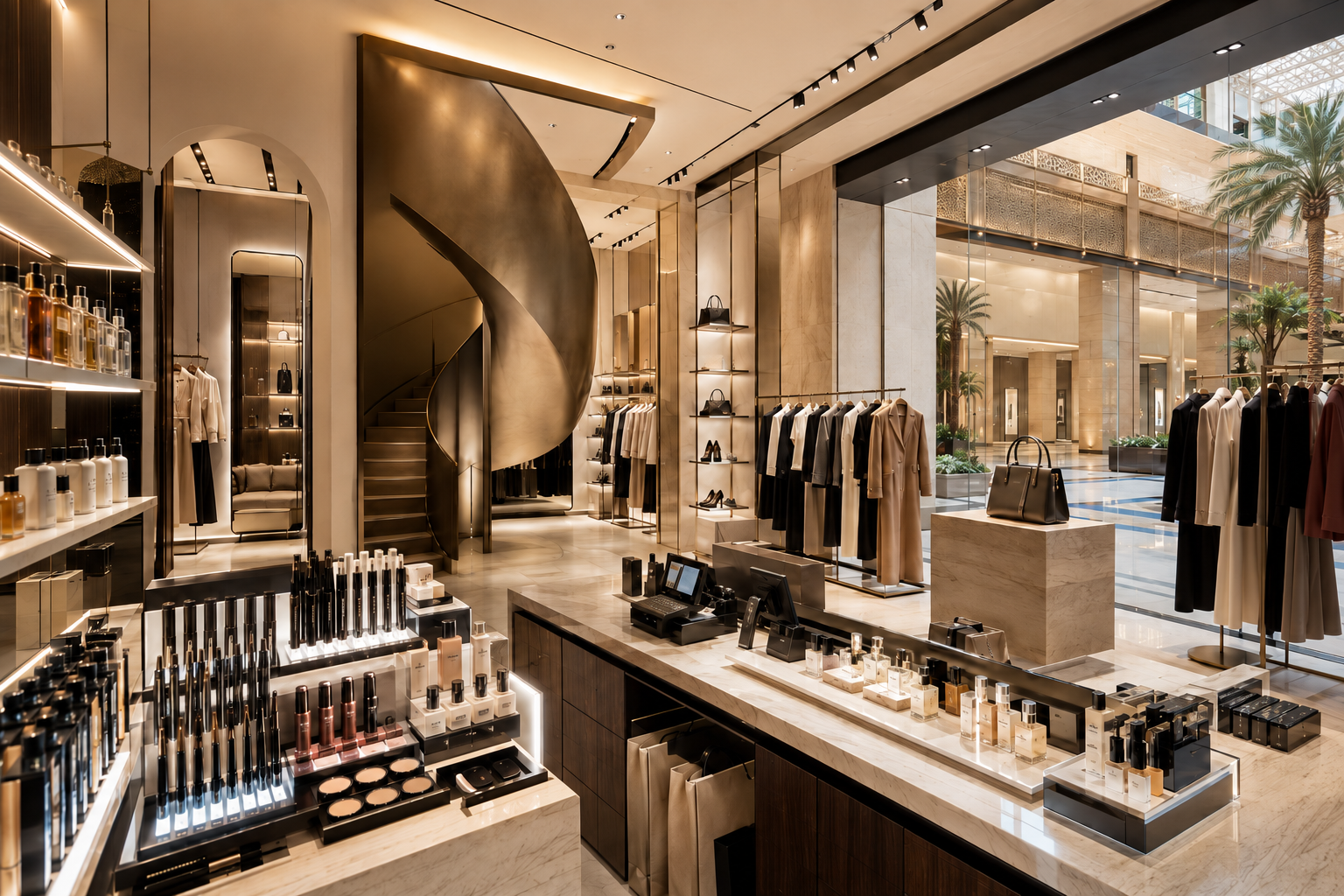
British luxury brand Victoria Beckham plans to expand its presence in the Middle East following a significant improvement in the business's financial performance. The region has become the company's second priority for international development after the United States.
Victoria Beckham Holdings, which encompasses both fashion and beauty divisions, has posted an annual operating profit for the first time in nearly two decades of operation. Against this backdrop, the company is preparing for the next phase of international growth, with a particular focus on markets with high demand for premium goods.
The Middle East has become the second priority after the US
Victoria Beckham and the heads of the group's two main divisions discussed the company's plans in an interview with the Financial Times.
Sybille Darricarrère Lunel, head of the Victoria Beckham fashion division, who joined the company in July 2025 after working at Christian Dior Couture, named the Middle East as the brand's second most important geographical priority after the US market.
However, the company has not yet announced which specific Gulf countries it plans to expand into, nor has it disclosed potential locations, retail partners, or timelines for opening new stores.
Therefore, it is premature to discuss specific Victoria Beckham projects in Dubai, Abu Dhabi, Riyadh, or other cities in the region.
Victoria Beckham Holdings has posted an operating profit for the first time
The international expansion plans follow a financial turnaround for the group.
The Victoria Beckham fashion brand has been operating since 2008, and the Victoria Beckham Beauty line was launched in 2019. After a long period of losses, the group has reported an annual operating profit for the first time.
According to Victoria Beckham, the company has overcome its previous financial challenges and is now growing at a more sustainable pace. At the same time, the perception of the brand itself is shifting: after nearly two decades, it is increasingly viewed as more than just a celebrity-led business.
The company's management structure has also changed. Sybille Darricarrère Lunel leads the fashion division from London, while Lauren Edelman has served as CEO of Victoria Beckham Beauty in New York since January 2025.
Victoria Beckham continues to oversee the overall creative direction of the business.
Beauty has become a vital part of the Victoria Beckham business
Victoria Beckham Beauty remains one of the group's key growth drivers.
When Lauren Edelman joined the company in 2023, the brand's beauty products were available in only three retail locations. They are now sold in approximately 300 locations across 15 markets.
The company specifically highlights high demand for certain products. For example, Victoria Beckham notes that the £32 Satin Kajal eyeliner sells on average every 30 seconds.
Detailed financial reports for the fashion and beauty divisions are not disclosed separately. However, in 2024, Victoria Beckham Beauty accounted for approximately two-thirds of the group's total sales.
When entering new markets in the Middle East, the company may develop several channels simultaneously, including beauty distribution, retail presence, and wholesale sales of clothing and accessories.
The company is expanding its range of clothing and accessories
The fashion division also plans to increase the share of categories beyond dresses and evening wear.
Last year, dresses and evening wear accounted for approximately a third of the division's sales. Now, additional focus will be placed on footwear, knitwear, outerwear, and leather goods.
In September, the company also plans to introduce the new Sloane bag.
In parallel, Victoria Beckham is expanding in the US. The brand has already begun operations in Miami and is preparing to open a space on Mercer Street in New York, which is planned to combine clothing, cosmetics, and fragrances.
After the US market, the Middle East is set to become the next major development destination.
Why international luxury brands are expanding in the Middle East
Gulf countries continue to attract international premium brands due to the high purchasing power of the population and the development of modern retail and tourism infrastructure.
Key luxury market hubs in the region include Dubai, Riyadh, and Doha, where the development of premium retail spaces, the hospitality sector, restaurant concepts, and other areas catering to an affluent audience continues.
For international brands, a presence in the Middle East allows them to engage with both local customers and the region's expatriates and international visitors.
Victoria Beckham's decision to make the Middle East its second priority after the US reflects the growing importance of the region in the strategies of global premium companies.
Victoria Beckham Holdings remains an independent business
Despite its international expansion, Victoria Beckham Holdings maintains a predominantly independent ownership structure.
In 2017, the investment firm NEO Investment Partners acquired a 30% stake in the business. Victoria Beckham and her family have retained control of the company.
In the first half of 2026, the group's sales reportedly continued to grow at a double-digit rate.
One of the main tasks in the next phase will be financing international growth while maintaining cost control—especially given that significant expenses were previously a factor in a prolonged period of losses.
What the expansion of international brands means for Dubai and the real estate market
The entry of new international brands does not in itself have a direct impact on property values. However, the expansion of global companies is one of the indicators of the development of Dubai and other Gulf cities as international hubs for trade, business, and premium consumption.
For the real estate market, the development of infrastructure around residential areas is particularly important: shopping centers, restaurants, hotels, services, and other facilities that residents use daily.
In the premium segment, this factor takes on additional significance. Buyers of luxury real estate evaluate not only the characteristics of a specific property but also the quality of the surrounding urban environment, access to international brands, and the level of neighborhood infrastructure.
Therefore, the continued expansion of global luxury companies in the Middle East can be viewed as part of a broader development of the region, aimed at international business, affluent residents, tourists, and investors.


.avif)