

Non-oil sectors continue to strengthen the UAE economy
The United Arab Emirates economy maintained positive momentum at the start of 2026. In the first quarter, the country's real gross domestic product grew by 3% year-on-year, reaching 485 billion dirhams at constant prices.
Non-oil sectors were the primary drivers of this growth. Their combined output increased by 4.8%, and their share of the national GDP reached a record 79.4%.
For comparison, non-oil activities accounted for approximately 78% of the country's economy at the end of 2025. These new figures confirm the UAE's gradual transition toward a more diversified development model, in which finance, construction, trade, technology, real estate, and professional services play an increasingly significant role.
Economic diversification is delivering measurable results
According to data from the Federal Competitiveness and Statistics Centre, economic growth in the first quarter was broad-based across various sectors.
The increase in the non-oil sector's share to 79.4% aligns with the goals of the national "We the UAE 2031" strategy. One of its objectives is to grow the country's economy to 3 trillion dirhams by 2031.
Minister of Cabinet Affairs Mohammad bin Abdullah Al Gergawi noted that these new results are the outcome of consistent government policy, coordinated efforts by authorities, and collaboration with the private sector.
He stated that economic growth should be reflected not only in statistical indicators but also in an improved quality of life, expanded business opportunities, and the creation of a favorable environment for citizens, residents, and investors.
The financial sector recorded the highest growth rates
Financial and insurance activities saw the fastest development in the first quarter of 2026, with growth in this segment reaching 17.3%.
Strong performance was also demonstrated by:
- construction — 8.1%;
- human health and social work activities — 7.7%;
- information and communication — 5.9%;
- professional, scientific, technical, and administrative activities — 4.9%;
- real estate activities — 4.8%;
- public administration, defense, and compulsory social security — 4.5%;
- wholesale and retail trade — 2.6%.
This structure demonstrates that the UAE's economic growth is not dependent on a single industry. Positive momentum is being observed simultaneously across finance, construction, technology, real estate, healthcare, and trade.
Which industries contributed most to GDP growth
In terms of actual impact on overall economic performance, the financial and insurance sector led the way, contributing 2.44 percentage points to GDP growth.
Other significant sectors include:
- construction — 1.04 percentage points;
- wholesale and retail trade — 0.42 percentage points;
- real estate activities — 0.36 percentage points;
- professional, scientific, technical, and administrative activities — 0.29 percentage points.
The data confirms that the construction industry and the real estate market remain key drivers of the country's economic development.
Construction sector grew by 8.1%
Construction was one of the fastest-growing sectors of the UAE economy in the first quarter of 2026.
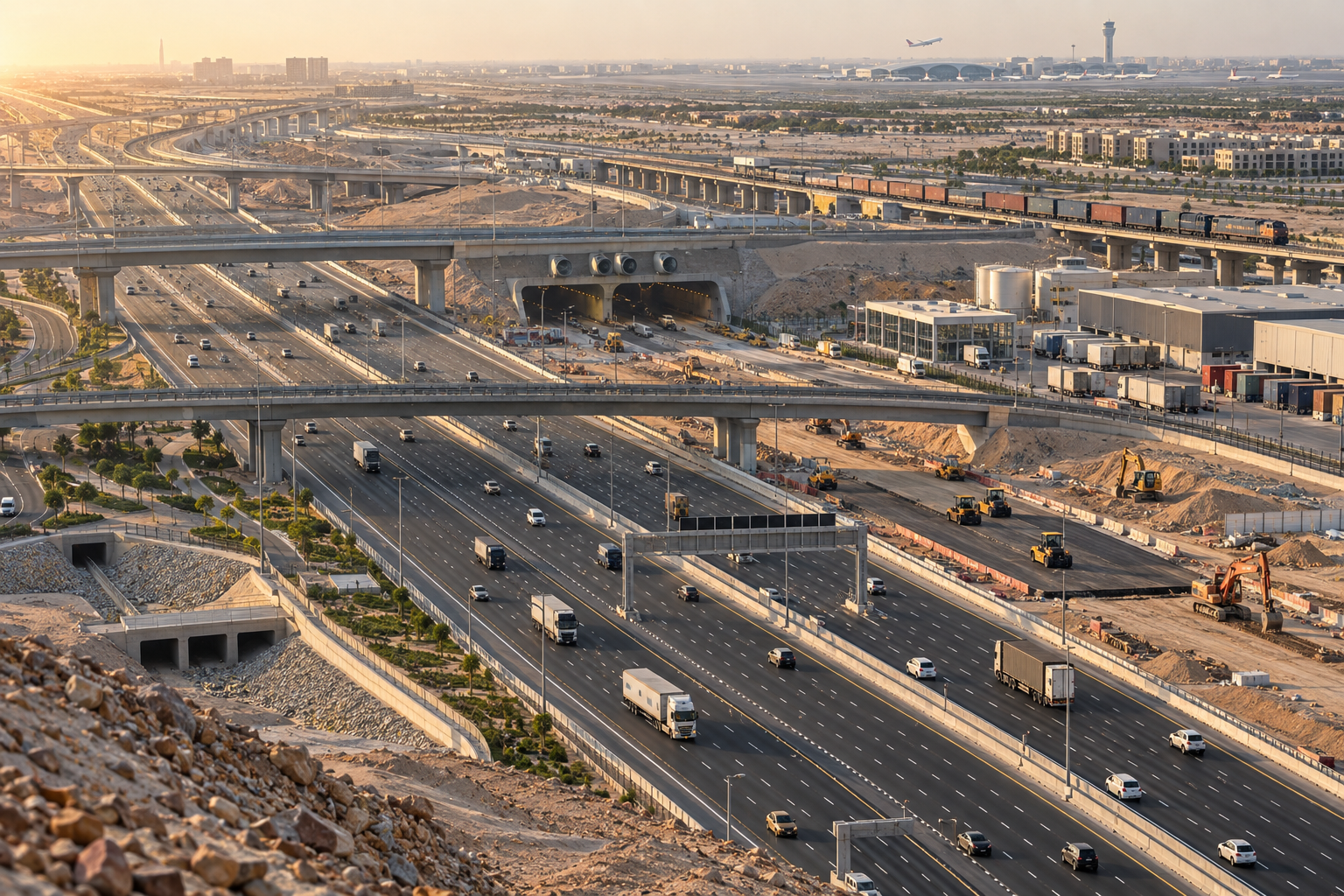
The 8.1% growth in the sector reflects the ongoing implementation of major residential, commercial, industrial, and infrastructure projects.
The expansion in construction activity is driven by several factors:
- population growth;
- development of new residential areas;
- modernization of transport infrastructure;
- increased business activity;
- demand for hospitality, office, and logistics facilities.
For the real estate market, the increase in construction volume means new supply, the development of new districts, and a wider range of options for buyers and investors.
Real estate activities increased by 4.8%
The real estate sector also showed steady growth, rising 4.8% year-on-year.
This indicates sustained activity in both the residential and commercial property markets. Demand is supported by international investors, entrepreneurs, professionals, and families who view the UAE as a place for long-term residency.
Additional factors include:
- population growth;
- the expansion of long-term residency programs;
- the development of the business environment;
- the creation of new jobs;
- large-scale infrastructure projects;
- high developer activity.
Real estate continues to serve a dual purpose: meeting the needs of a growing population and acting as a tool for long-term capital investment.
Finance and insurance are becoming a key economic driver
Growth in financial and insurance activities of 17.3% was the highest among major sectors.
The UAE continues to develop its banking infrastructure, fintech, asset management, Islamic finance, insurance, and international investment services.
Strengthening the financial system is directly significant for the real estate market. The availability of banking services, mortgage financing, investment products, and digital payment solutions simplifies transactions and increases the country's appeal to international capital.
The technology sector supports the new economic model
Information technology and communications grew by 5.9%.
The UAE is actively investing in digital infrastructure, artificial intelligence, cloud technologies, data centers, and the automation of government services.
The development of technology sectors creates new jobs for highly skilled professionals and supports demand for:
- modern office spaces;
- housing near business hubs;
- serviced apartments;
- commercial infrastructure;
- facilities for technology and scientific companies.
The growth of the digital economy is also strengthening the positions of Dubai and Abu Dhabi as regional hubs for international business.
Foreign trade supports economic growth
Strong performance in the non-oil sector is linked to the active development of international trade.
The Comprehensive Economic Partnership Agreement (CEPA) program plays an additional role. Such agreements expand access for Emirati companies to foreign markets and support the development of industry, logistics, exports, and trade.
Minister of State for Foreign Trade, Dr. Thani bin Ahmed Al Zeyoudi, noted that the UAE's integration into the global economy creates new business opportunities and increases the country's attractiveness for high-quality foreign investment.
Non-oil exports grew by 23.9%
In the first half of 2026, the UAE's non-oil exports increased by 23.9%, reaching 452.8 billion dirhams.
This was the highest growth rate among the main components of the country's foreign trade.
The increase in exports indicates improved competitiveness in the industrial and service sectors. For the economy, this means an expansion of the production base, job creation, and rising demand for warehouse, industrial, and logistics real estate.
A particularly noticeable effect can be observed in areas connected to ports, airports, free economic zones, and major transport corridors.
The UAE maintains its course toward economic openness
Minister of Economy, Abdulla bin Touq Al Marri, emphasized that the first-quarter figures confirm the resilience of the national economy and the effectiveness of its reforms.
In his assessment, the growth of the non-oil sector strengthens the UAE's position as one of the world's leading hubs for business, trade, and investment.
The country's competitive advantages include:
- modern legislation;
- developed infrastructure;
- access to international markets;
- digital government services;
- special economic zones;
- conditions for foreign business ownership;
- long-term residency programs.
These factors create a favorable environment for companies and private investors.
The country is updating its GDP calculation methodology
At the same time, the UAE is carrying out a large-scale modernization of its national statistical system.
The comprehensive GDP revision program includes:
- integrating new data sources;
- expanding statistical coverage of free economic zones;
- standardizing the methodology;
- aligning calculations with international standards;
- improving the accuracy and comparability of indicators.
The published results for the first quarter were calculated using the current methodology.
Once the reform is complete, historical data will be revised to reflect the updated approach. This will allow for a more accurate assessment of the contribution of modern industries, free zones, and new areas of economic activity.
What economic growth means for real estate investors
GDP growth and a high share of the non-oil sector create a favorable backdrop for the UAE real estate market.
Several key factors are important for investors:
- the economy is growing across a wide range of sectors;
- construction maintains strong momentum;
- the real estate sector continues to expand;
- the financial system is showing significant growth;
- foreign trade is boosting business activity;
- tech industries are creating new categories of tenants;
- the influx of companies and professionals is supporting housing demand.
However, general macroeconomic indicators do not guarantee the profitability of a specific property. When choosing real estate, it is essential to analyze the location, entry price, volume of future supply, developer reputation, rental demand, and investment horizon.
Which real estate segments may receive support
Continued economic diversification is capable of supporting various market sectors.
Residential real estate
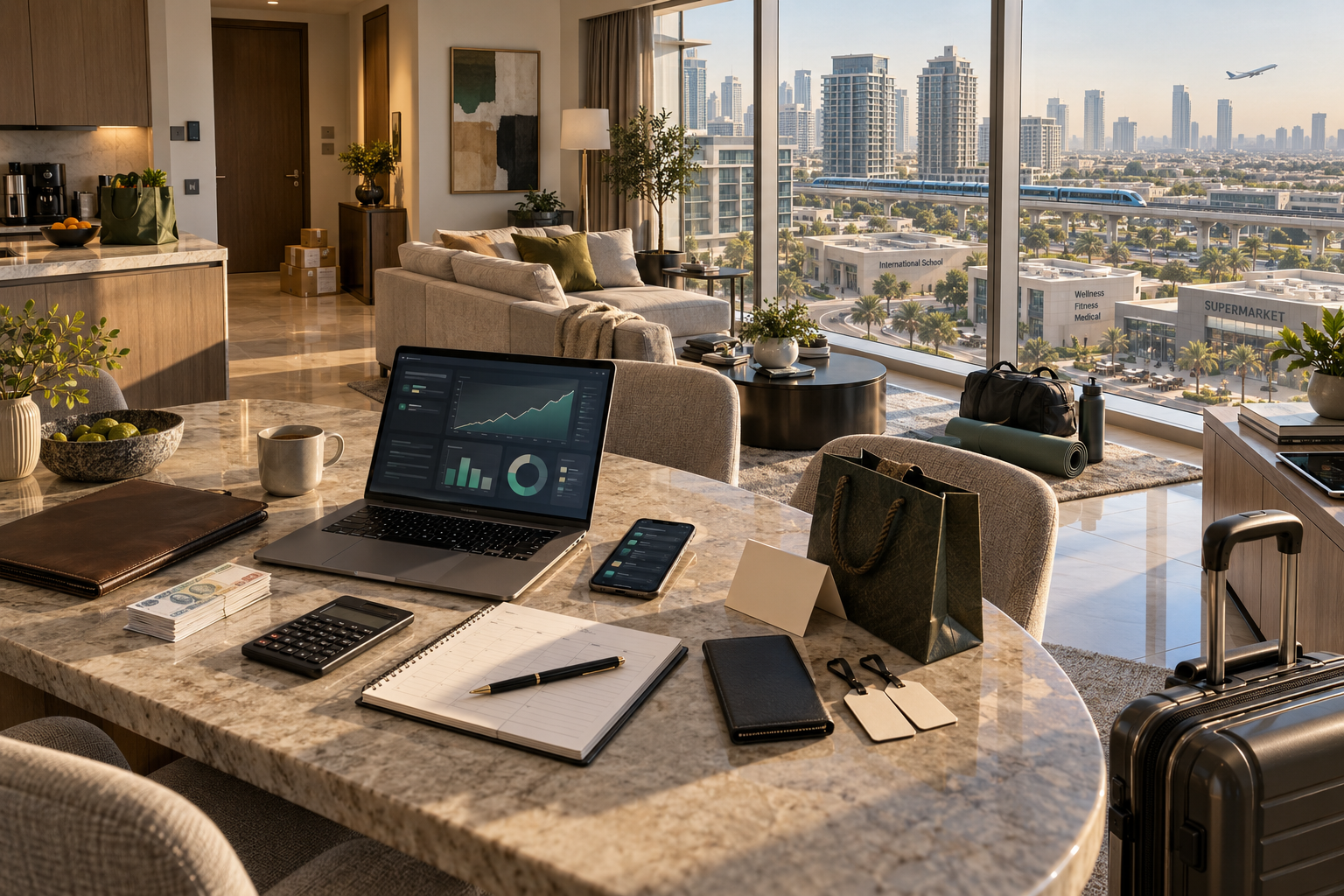
Population and employment growth are driving demand for apartments, townhouses, and villas for both personal use and long-term rentals.
Office space
The expansion of the financial, technological, and professional sectors is increasing the need for high-quality commercial real estate.
Industrial and logistics facilities
Growth in trade and non-oil exports is supporting demand for warehouses, distribution centers, and industrial premises.
Hospitality real estate
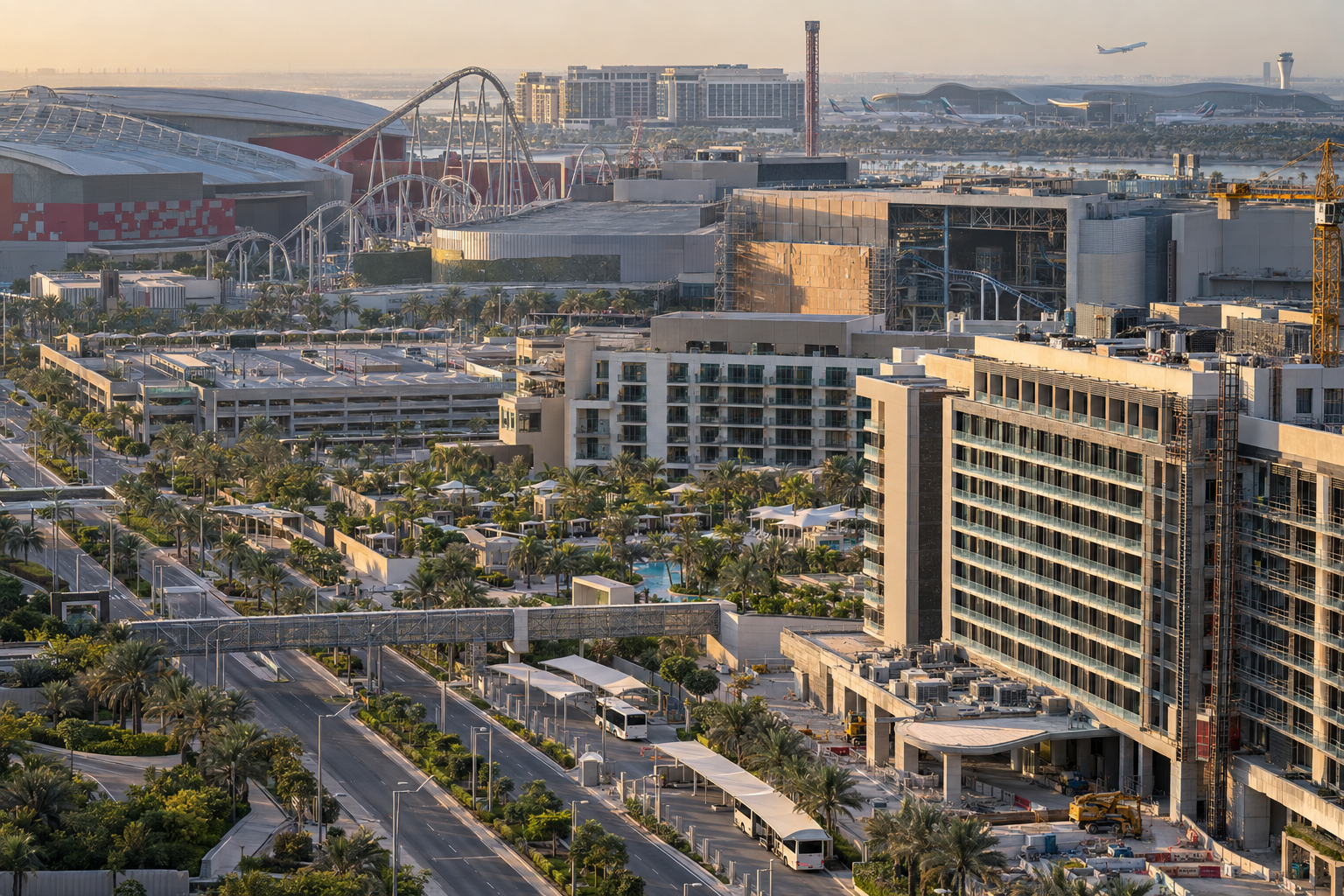
The development of tourism and international business activity is creating opportunities for hotels and serviced apartments.
Healthcare real estate
Growth in the healthcare sector by 7.7% could stimulate the development of clinics, medical centers, and specialized facilities.
Economic diversification strengthens the long-term resilience of the UAE
The results for the first quarter of 2026 show that the country's economic growth is increasingly driven by non-oil sectors.
The share of these sectors has reached 79.4% of GDP, setting a new record. Finance, construction, technology, trade, and real estate continue to increase their contribution to the national economy.
For international investors, this confirms the UAE's transition toward a more diverse and sustainable development model.
For the real estate market, economic growth creates the conditions for sustained demand, infrastructure expansion, and new investment opportunities across the residential, commercial, hospitality, and industrial sectors.

.avif)