
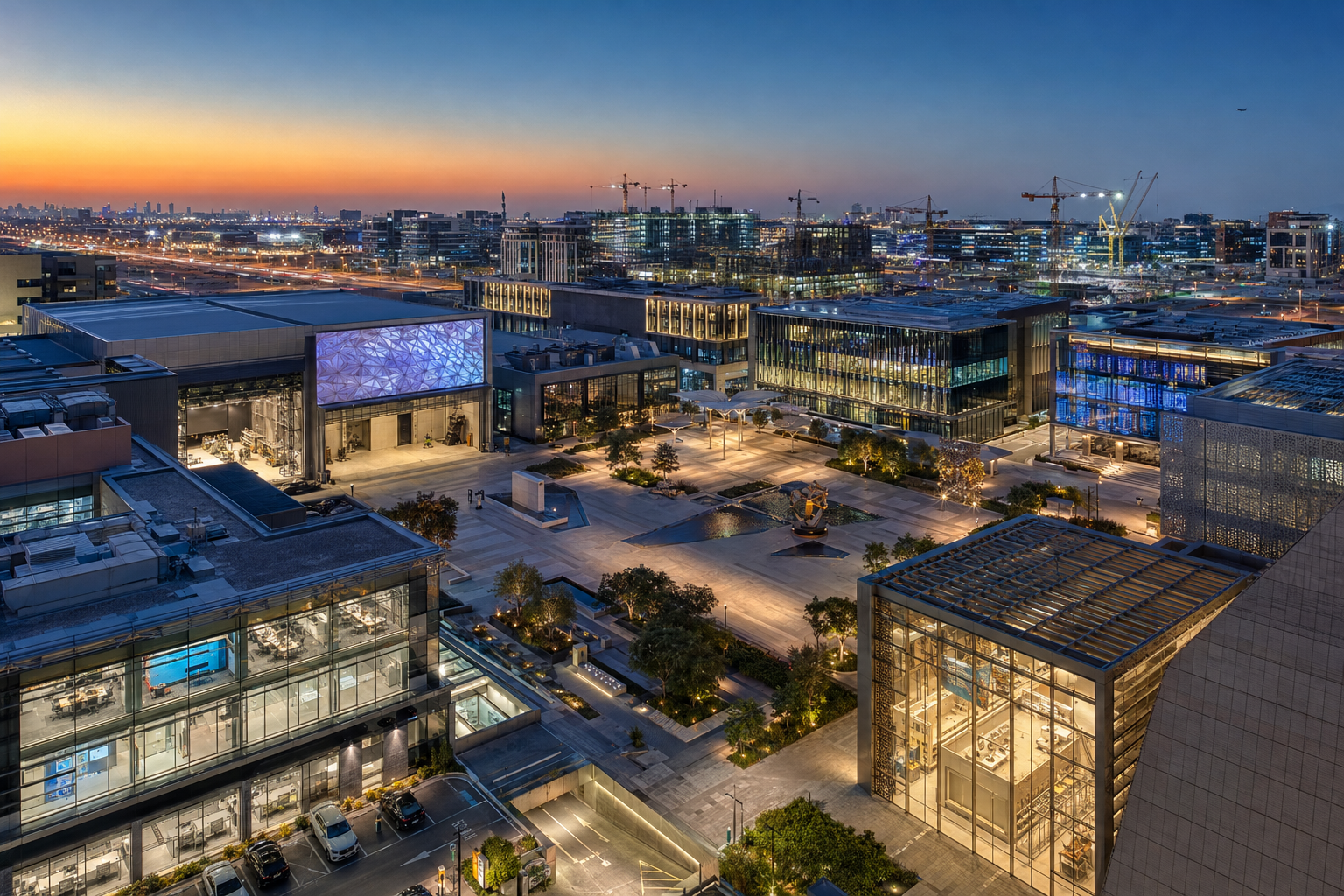
In 2025, the emirate attracted 754 greenfield projects, $3.756 billion in capital, and created over 19,000 jobs.
For the fourth consecutive year, Dubai has ranked first globally for the number of new foreign direct investment projects in the cultural and creative industries. In 2025, the emirate launched 754 greenfield projects—investment initiatives involving the creation of new enterprises and businesses from the ground up.
According to data from fDi Markets, a service of Financial Times Ltd., Dubai significantly outperformed other international hubs. For comparison, London recorded 227 such projects during the same period, Singapore 197, Riyadh 157, and Bangalore 132.
The study covered a total of 233 cities worldwide.
The results demonstrate that Dubai's creative economy is steadily evolving into an independent investment sector, integrating traditional cultural industries, technology, digital content, media, design, and specialized professional services.
Investment volume reached $3.756 billion
The total volume of foreign direct investment in new projects within Dubai's cultural and creative sector reached $3.756 billion in 2025.
The emirate ranked second in the world in terms of capital attracted.
The economic significance of the sector is further confirmed by the number of jobs created. New investment projects generated 19,304 jobs throughout the year.
Thus, the development of creative industries impacts not only the city's cultural landscape but also employment, business activity, and the formation of new economic sectors.
Dubai outperformed London and Singapore
The gap between Dubai and other major global cities in terms of the number of new greenfield projects proved to be significant.
In 2025, the figures were as follows:
- Dubai — 754 projects;
- London — 227;
- Singapore — 197;
- Riyadh — 157;
- Bangalore — 132.
In fact, the number of new projects in Dubai was more than triple that of London, which held the next position among major international hubs.
Maintaining the top spot for the fourth year in a row highlights the sustained nature of investment interest in the emirate.
Which creative economy sectors are attracting capital
The concept of cultural and creative industries in Dubai today encompasses far more than just traditional arts and entertainment.
Foreign investors are pouring capital into:
- advertising and public relations;
- programming and specialized IT services;
- digital services and data processing;
- film and media production;
- the gaming industry;
- artificial intelligence solutions;
- education for creative professions;
- architecture and design;
- professional services;
- crafts and cultural projects;
- performing arts;
- museums and historical sites;
- logistics and services for creative businesses.
Development at the intersection of creativity and technology is becoming particularly prominent.
The growth of digital content, artificial intelligence, programming, the gaming industry, and specialized services is gradually reshaping the structure of the emirate's creative economy.
India has become the largest source of capital
The geography of investors remains diversified.
In 2025, India accounted for 19% of the total volume of greenfield investments in Dubai's cultural and creative industries.
Followed by:
- USA — 17.5%;
- China — 13%;
- Malaysia — 12%;
- UK — 9%.
However, the structure changes when evaluating the number of launched projects rather than capital volume.
By this metric, the UK led with a 21.5% share. India accounted for 21% of new projects, the USA for 14%, and France for 4%.
This distribution shows that Dubai attracts both large investment capital and a broad influx of new companies from various regions of the world.
Why international companies choose Dubai
One of the growth factors remains the emirate's business environment.
Companies operating in the creative and technology sectors gain access to infrastructure, the international market, and the opportunity to develop their business in a highly globally integrated jurisdiction.
Factors supporting investment interest include:
- the possibility of 100% foreign ownership of companies;
- digitalization of government services;
- simplified business registration procedures;
- specialized free zones and industry clusters;
- long-term residency programs;
- developed transport and logistics infrastructure;
- access to markets in the Middle East, Asia, Europe, and Africa;
- Dubai's high level of international connectivity.
All these elements create conditions where international companies can use the emirate as both a local market and a regional base for further expansion.
The Dubai Economic Agenda D33 supports sector growth
The development of creative industries is linked to Dubai's long-term economic goals.
One of the key documents is the Dubai Economic Agenda D33, which aims to further scale the emirate's economy and strengthen its role as an international hub for business and investment.
Running in parallel is the Dubai Creative Economy Strategy, which fosters the development of cultural, creative, and technological sectors.
The modern creative economy now encompasses not only the production of cultural goods but also a wide range of related fields—from programming and digital platforms to advertising, education, logistics, and professional services.
Creative industries are becoming part of Dubai's new economy
The growth in investment shows that the sector is gradually shifting from a primarily cultural sphere into a full-fledged element of a diversified economy.
Modern creative companies create intellectual property, digital products, software, media content, and new technological solutions.
This promotes the development of high-value-added economic segments and increases the demand for skilled professionals.
At the same time, additional demand is being generated for office spaces, creative clusters, studios, educational infrastructure, and residential real estate for industry workers.
How the development of the creative economy is linked to the real estate market
For the real estate market, the growth of creative and technological industries is important primarily through increased business activity and job creation.
The creation of 19,304 jobs from new investment projects alone means additional demand for:
- residential real estate;
- long-term rentals;
- office space;
- flexible workspaces;
- retail and service infrastructure.
The most significant impact is likely to be seen in areas where technology, media, and creative business clusters are already established.
When choosing real estate for investment, it is important to consider not only current demand but also the development of the local business infrastructure.
International professionals are driving housing demand
Creative industries traditionally attract a mobile international audience—professionals in technology, media, marketing, design, architecture, film, and digital business.
As new companies open, many employees are relocating to Dubai on a long-term basis.
For the residential market, this creates potential demand from:
- international corporate professionals;
- entrepreneurs;
- project managers;
- designers and architects;
- IT sector workers;
- representatives of the media and digital economy.
This demographic often prioritizes areas with high-quality infrastructure, good transport links, and convenient access to business hubs.
Economic diversification reduces reliance on specific industries
For real estate investors, it is not just the current volume of transactions that matters, but also the long-term stability of the economy.
The expansion of creative, digital, and technology sectors is contributing to the diversification of Dubai's economy.
The more diverse the sectors generating jobs and attracting international capital, the broader the economic foundation for demand in both residential and commercial real estate.
Therefore, the development of the creative economy can be viewed as a structural factor supporting the city's long-term growth.
Dubai strengthens its status as an international hub for creative business
Dubai’s leadership in the number of new foreign investment projects for four consecutive years demonstrates that the emirate has created a competitive environment for international creative business.
In 2025, the sector attracted 754 new projects and $3.756 billion in capital, while creating over 19,000 jobs.
A combination of advanced infrastructure, international connectivity, digital government services, and an open business environment continues to drive interest from companies in the UK, India, the US, China, and other major economies.
For the real estate market, the continued growth of creative and technology industries holds long-term significance: the rising number of companies and jobs expands the emirate's economic base and generates additional demand for housing, office space, and modern urban infrastructure.


.png)
.avif)